
Watering
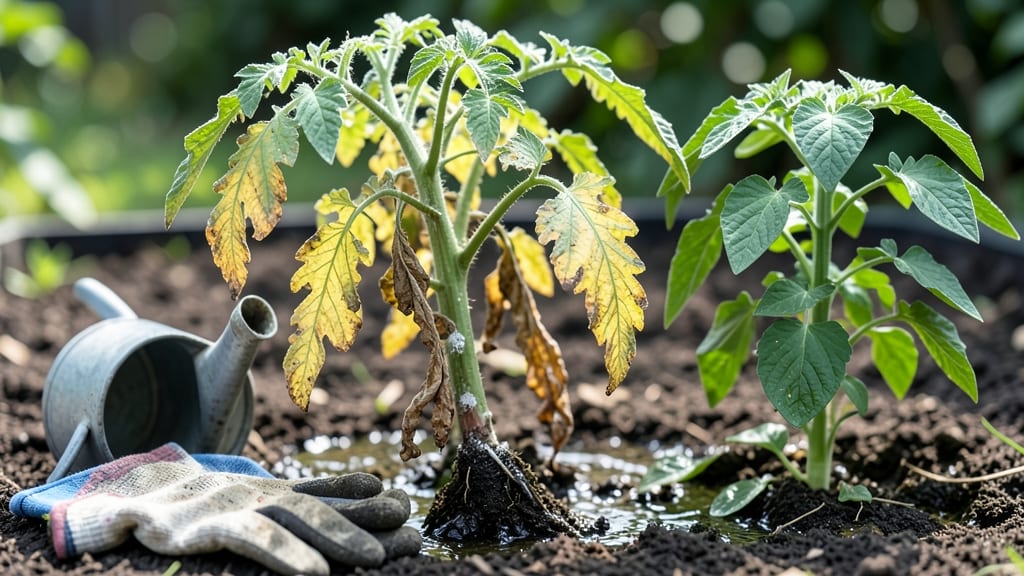
Those tomato plant overwatering symptoms—yellowing leaves and mushy stems—are a cry for help from your plants. 🌱 I’ve seen this too many times: a plant that looked healthy one day turns into a sad, soggy mess overnight.
The problem isn’t just too much water—it’s the suffocating roots and fungal infections that follow.
Yellowing leaves start at the bottom and creep upward, while stems turn soft and spongy to the touch. The soil may smell foul, and you’ll spot mold or white fungal growth near the base.
Worse, overwatering invites root rot, which cuts off nutrients and weakens the plant’s ability to fight pests. The good news? You can rescue your tomatoes if you act fast.
First, stop watering immediately and let the soil dry out. Use your finger to check moisture—if the top 2 inches feel damp, wait another day. Amend the soil with compost or perlite to improve drainage, and consider repotting if the roots are rotting.
Prevention is easier: water deeply but only when the top inch of soil feels dry, and always use pots with drainage holes.
Once you adjust your watering routine, your plants should bounce back within a week or two. Keep an eye out for new growth, and don’t let the soil stay soggy again.
This fix works for container tomatoes, raised beds, or in-ground plants—just adapt the timing to your climate. Your tomatoes will thank you with juicy, healthy fruit.
Root Causes of Overwatering
When your tomato plants start showing signs of distress like yellowing leaves or mushy stems, overwatering is often the culprit. But why does this happen? Understanding the underlying causes helps you adjust your watering habits before it’s too late.
Let’s break down the key reasons your tomato plants might be drowning in too much water.
Tomato plants thrive in well-draining soil, but if your garden beds or containers lack proper drainage, excess water pools around the roots. This can happen due to:
- Clay-heavy soil: Clay retains water like a sponge, suffocating roots and cutting off oxygen. If your soil feels dense or hard when dry, it’s likely the issue.
- Compacted soil: Foot traffic, machinery, or even heavy rainfall can compress soil, reducing its ability to drain. Roots struggle to breathe, leading to waterlogged conditions.
- Improper container choices: Pots without drainage holes trap water, creating a soggy environment. Even "self-watering" containers can overwater if not monitored.
💡 Pro Tip: Test your soil’s drainage by filling a container with it, adding water, and timing how long it takes to drain. If it takes longer than 30 minutes, amend the soil with perlite, sand, or compost to improve aeration.
Even the best-intentioned gardeners can overdo it. Tomato plants need consistent moisture, but their roots also require oxygen to function. Common watering mistakes include:
- Watering on a schedule: Assuming your plants need water every day—regardless of weather or soil conditions—leads to oversaturation. Rain or humidity can make supplemental watering unnecessary.
- Shallow, frequent watering: Light sprinkles that barely penetrate the soil encourage roots to stay near the surface, where they’re more prone to rot. Deep, infrequent watering (1–2 inches per week) promotes stronger root growth.
- Ignoring weather changes: Heavy rain or high humidity increases soil moisture, yet many gardeners keep watering as usual. Always check soil moisture before adding more water.
🎯 Action Step: Use your finger to test soil moisture 1–2 inches below the surface. If it’s damp, hold off on watering. For containers, lift them—if they feel heavy, they’re likely waterlogged.
Not all overwatering is your fault—sometimes, Mother Nature plays a role. Environmental conditions can exacerbate waterlogging:
- Poor air circulation: Dense foliage or crowded plants create a humid microclimate, slowing evaporation and trapping moisture around leaves and soil.
- Low sunlight exposure: Shady spots or early/late-season planting (when days are shorter) reduce transpiration, meaning plants absorb less water—but the soil stays wet longer.
- High humidity or rain: Frequent downpours or humid climates can saturate soil faster than it can dry, especially in areas with poor drainage.
✨ Solution: Prune plants for better airflow, move containers to sunnier spots, and use mulch to regulate soil temperature and moisture evaporation.
Even the hardiest tomato varieties can suffer if planted in the wrong conditions. Common planting errors include:
- Planting too deep: Burying stems too far can encourage rot at the soil line, especially in heavy or water-retentive soils.
- Using the wrong soil mix: Potting soils with high peat or coconut coir content hold moisture for days, choking roots if not balanced with amendments.
- Ignoring root health: Transplant shock or damaged roots (from improper handling) weaken a plant’s ability to regulate water uptake, making it more susceptible to overwatering.
🔥 Fix It: When planting, ensure only the lower third of the stem is buried. For containers, use a mix of 60% potting soil, 20% perlite, and 20% compost to balance moisture retention and drainage.
Revive Your Tomatoes Now
Overwatering can feel like a death sentence for your tomato plants, but with the right moves, you can nurse them back to health—even if they’re looking a little worse for wear. The key is acting fast, adjusting your watering habits, and giving your plants the space they need to breathe.
Below, we’ll break down the fixes based on the symptoms you’re seeing, plus some pro tips to keep your tomatoes thriving long-term.
If your tomato leaves are turning yellow (especially the lower ones) and feel soggy to the touch, your plant is drowning in its own roots. Here’s how to turn things around:
🍳 Step 1: Stop Watering Immediately
- Why? Wet soil suffocates roots, blocking oxygen and inviting fungal diseases like Fusarium or Phytophthora.
- How? Pause watering for 3–5 days to let the soil dry out. If the ground is still soggy after that, hold off longer.
👨🍳 Step 2: Check and Improve Soil Drainage - Dig a test hole near the plant (6–8 inches deep).
If water pools or drains slower than 1–2 hours, your soil is too compacted. - Fix it: - For garden beds: Mix in compost, perlite, or coarse sand (1 part amendment to 3 parts soil) to loosen the texture. - For containers: Repot into a larger planter with well-draining potting mix (add orchid bark or vermiculite for extra airflow). - Pro tip: 💡 Avoid heavy clay soils—they’re notorious for holding water like a sponge.
Amend them aggressively or grow in raised beds.
🥘 Step 3: Prune Damaged Foliage
- Snip off yellow or blackened leaves with sterilized scissors (wipe with rubbing alcohol between cuts).
- Why? Dead leaves waste energy and can spread rot. Focus on removing lower leaves first—they’re most vulnerable to soil-borne diseases.
⏰ Step 4: Adjust Your Watering Schedule
- Water deeply but infrequently: Aim for 1–1.5 inches of water per week (including rainfall), delivered in one long session (e.g., 10–15 minutes) rather than daily sprinkles.
- Best time to water: Early morning (6–10 AM) so foliage dries quickly and reduces fungal risks.
- Avoid wetting leaves: Use drip irrigation or a soaker hose to target the soil, not the stems.
If your tomato stems are soft, discolored, or collapsing, root rot has likely set in. This is serious—act fast or your plant may not recover.
🔪 Step 1: Assess the Damage - Gently wiggle the plant to check for loose roots.
Healthy roots should cling to soil; mushy or black roots mean rot is spreading. - If roots are mostly intact but stems are soft: - Trim away any blackened or squishy stem tissue with a clean knife (leave a small healthy section). - Dust the cut with cinnamon or copper fungicide to prevent further infection.
🌡️ Step 2: Repot or Transplant (If Necessary) - For container plants: Remove the plant, rinse off old soil, and inspect roots.
Trim away rotten roots, then repot in fresh, sterile potting mix with perlite or coconut coir for drainage. - For garden plants: Dig a hole twice as wide as the root ball, mix in compost and sand, and transplant carefully. Stake the plant to support weak stems. - Pro tip: ✨ Add a handful of mycorrhizal fungi to the new soil—these beneficial microbes help roots absorb water and nutrients more efficiently.
🎯 Step 3: Prevent Future Rot
- Improve airflow: Space plants 18–24 inches apart (or prune suckers to reduce crowding).
- Use mulch strategically: Apply 2–3 inches of straw or wood chips around the base (but keep it 2–3 inches away from the stem) to retain moisture without smothering the plant.
- Avoid overhead watering: Use drip lines or watering globes to keep leaves dry.
Once your tomatoes are back on track, keep these habits to avoid overwatering disasters:
- 📊 The Finger Test: Stick your finger 1–2 inches into the soil. Water only if it’s dry at that depth. - 🌡️ Monitor Weather: Adjust watering based on rainfall and temperature. Hot days? Water more. Cool, cloudy days?
Hold off. - 🥗 Choose the Right Containers: If growing in pots, pick ones with drainage holes and fabric liners (like grow bags) to prevent waterlogging. - 🍎 Rotate Crops: If you’ve had overwatering issues in a garden bed, don’t replant tomatoes there for 2–3 years to break disease cycles.
Remember: Tomatoes are resilient! With these fixes, your plants should bounce back in 1–2 weeks, and you’ll be back to harvesting juicy, vine-ripened tomatoes in no time. 🍅🌿
Frequently asked questions
How can I tell if my tomato plant has root rot from overwatering?
Check for mushy, blackened roots when you gently remove the plant from soil. The stem may also feel soft or hollow when pressed, and you might notice a foul odor coming from the roots. If leaves turn yellow and wilt despite moist soil, root rot is likely the culprit.
Why do my tomato leaves turn yellow when I water them regularly?
Yellowing leaves (especially lower ones) often signal overwatering because excess moisture blocks oxygen from reaching roots. If the soil stays soggy for days, roots suffocate, leading to nutrient deficiencies. Test soil moisture by sticking your finger 1-2 inches deep—if damp, hold off on watering.
Can I save a tomato plant with overwatering damage?
Yes, but act fast! Stop watering immediately and let soil dry completely. Prune yellow leaves and repot in fresh, well-draining mix if roots are rotting. For severe cases, trim damaged stems and apply fungicide. With proper care, plants often recover within 1-2 weeks.
What's the best soil mix to prevent overwatering in containers?
Use a blend of 60% potting soil, 20% perlite, and 20% compost for optimal drainage. This combo prevents waterlogging while retaining enough moisture. Add orchid bark for extra airflow if your climate stays humid.
How often should I water tomato plants to avoid overwatering?
Water deeply 1-2 times per week, delivering 1-1.5 inches total (including rain). Always check soil moisture first—water only when the top 1 inch feels dry. Early morning watering prevents fungal growth from evening dampness. Adjust for heat or rain.