
Pests
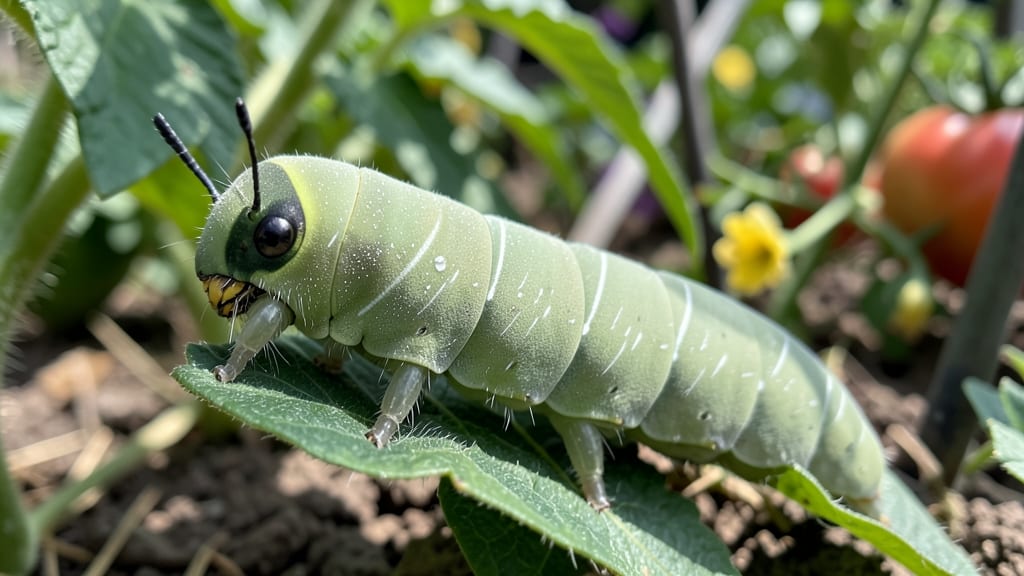
That green, inch-long large caterpillar munching your tomato plants? It’s the tomato hornworm—one of the most dramatic garden pests you’ll ever spot. 🌱 I’ve watched these striped caterpillars strip entire plants bare in just a few days, leaving behind chewed leaves and wilting vines.
The good news? You don’t need harsh chemicals to stop them—just the right organic tricks.
Hornworms start small but grow fast, hiding in foliage until they’ve devoured half your harvest. Their droppings (called frass) are another dead giveaway—tiny black pellets scattered across leaves. The key to control is acting early: handpick them, use Bacillus thuringiensis (Bt), or introduce natural predators like parasitic wasps.
These methods work without harming your garden’s ecosystem.
Prevention is even easier: row covers in early season, companion planting with basil or marigolds, and regular scouting keep populations low. Once you’ve seen one, you’ll spot them instantly—and your tomatoes will thank you. The goal isn’t just saving your plants; it’s keeping your garden thriving the natural way.
Whether you’re dealing with a first infestation or a yearly battle, these solutions scale from small containers to full-size gardens. No more chemical sprays—just smart, eco-friendly control that protects both your harvest and the critters that keep your garden balanced.
What Draws Them In
Large tomato caterpillars—often the hungry larvae of hornworms or tomato fruitworms—don’t just appear out of nowhere. Their presence is a clear sign your garden is offering them an all-you-can-eat buffet.
Understanding the why behind their arrival helps you outsmart them before they devour your crop. Here’s what’s really luring them in:
Ripe, soft, or bruised tomatoes are caterpillar magnets. These pests use their keen sense of smell to detect volatile organic compounds (VOCs) released by overripe fruit—think of it as a dinner bell. Even a single split tomato can attract a swarm within hours.
Why it matters: A single egg laid on a ripe tomato can hatch into a caterpillar that strips the plant bare in days. The longer fruit lingers, the more eggs females lay nearby.
Stressed or nutrient-deficient tomato plants are weaker and produce less glycoalkaloids (natural toxins that deter pests). Healthy plants, on the other hand, are less appealing—but caterpillars still target them if other options are scarce.
Key triggers:
- Drought stress: Wilting plants emit distress signals that attract pests.
- Nitrogen deficiency: Yellowing leaves reduce plant resilience.
- Fungal infections: Moldy foliage can make plants more vulnerable.
Female moths (like the Manduca sexta, aka hornworm moth) are drawn to tomato plants during their peak oviposition period—typically at dusk or dawn. They prefer:
- Young, tender leaves (rich in proteins for larval growth).
- Sheltered spots (under leaves or near stems to protect eggs from predators).
- Warm, humid microclimates (ideal for egg hatching in 3–5 days).
Pro tip: If you spot tiny green eggs in clusters on the underside of leaves, act fast—they’ll hatch in days! 🐛
Caterpillars thrive in warm, humid conditions (ideal for both larvae and adult moths). Key seasonal windows:
| Factor | Impact on Caterpillars |
|---|---|
| Spring warmth | First generation emerges; moths seek out new tomato plantings. |
| Summer humidity | Accelerates egg hatching and larval growth (they can double in size in a week!). |
| Fall heatwaves | Second generation peaks; late-season tomatoes become prime targets. |
Actionable insight: Monitor your garden during late spring to early summer—this is when infestations explode. 🌡️
Now that you know why these caterpillars crash your tomato party, the next step is how to evict them without chemicals. Stay tuned!
Natural Ways to Remove Caterpillars
If you’ve spotted large tomato caterpillars munching through your garden, don’t panic—there are plenty of effective, organic solutions to evict them without resorting to harsh chemicals. Below, we’ve mapped out practical fixes based on the most common causes, along with prevention tips to keep your tomatoes safe long-term.
If you’ve caught the problem early, manual removal is the fastest and most satisfying solution.
- 👨🍳 Step 1: Scout at Dawn or Dusk Caterpillars are most active during cooler hours. Inspect leaves, stems, and fruit for green or brown striped larvae (hornworms) or hairy caterpillars (tomato loopers).
- 🔪 Step 2: Drop Them in Soapy Water Use a pair of gloves (or just your fingers if you’re brave!) to pluck them off. Never crush them—they release a foul odor that can attract more pests.
Instead, drown them in a bucket of soapy water (1 tbsp dish soap per gallon).
- 🌿 Pro Tip: Check the undersides of leaves—this is where caterpillars hide during the day.
Prevention: Handpick daily for 3–5 days to break their life cycle.
For a targeted, chemical-free kill, Bacillus thuringiensis var. kurstaki (BT) is a biological pesticide that attacks caterpillars’ digestive systems without harming beneficial insects.
- 🔥 Step 1: Choose the Right BT Look for BT formulations labeled for caterpillars (e.g., Dipel, Xentari, or Thuricide). Avoid BT var. israelensis—it’s for mosquitoes, not tomato pests.
- 👨🍳 Step 2: Apply at Dusk Mix BT with water according to package instructions and spray directly on caterpillars and leaves where they feed. Reapply every 3–7 days (or after rain).
- 🌡️ Pro Tip: BT works best when ingested, so focus on newly hatched caterpillars before they grow too large.
Prevention: Apply preventatively before you see caterpillars (e.g., when tomato plants start flowering).
Neem oil is a multi-purpose organic repellent that disrupts feeding, mating, and egg-laying in caterpillars.
- ⏰ Step 1: Mix the Solution Combine 1–2 tbsp neem oil + 1 tsp mild soap (as an emulsifier) + 1 quart water. Shake well before use.
- 🍳 Step 2: Spray Thoroughly Apply to all leaf surfaces, stems, and fruit—especially where caterpillars hide. Reapply every 5–7 days or after rain.
- 💡 Pro Tip: For extra stickiness, add 1 tsp horticultural oil to help the spray cling longer.
Prevention: Use neem oil as a preventative spray every 2 weeks during the growing season.
Encourage caterpillar predators like parasitic wasps, ladybugs, and lacewings to naturally control the population.
- 🔥 Step 1: Plant Companion Flowers Grow dill, fennel, or marigolds near tomatoes to attract beneficial wasps (e.g., Cotesia congregata), which lay eggs inside hornworms.
- 👨🍳 Step 2: Avoid Broad-Spectrum Pesticides Skip chemical sprays—they kill predator insects too. Stick to targeted organic methods (like BT or neem).
- 🌡️ Pro Tip: If you see white cocoons on caterpillars, leave them be—they’re signs of parasitic wasps at work!
Prevention: Diversify your garden with pollinator-friendly plants to sustain predator populations.
For severe infestations, block caterpillars before they reach your plants.
- 🍳 Step 1: Use Row Covers Cover young tomato plants with fine mesh row fabric (1/4-inch or smaller holes). Secure edges with soil or stakes to prevent moths from laying eggs.
- 👨🍳 Step 2: Collar Trunks with Aluminum Foil Wrap foil collars around stems to block crawling caterpillars from migrating up.
- 💡 Pro Tip: Remove row covers when flowers appear to allow pollination, but reapply after fruit sets if needed.
Prevention: Rotate crops annually to disrupt moth breeding cycles.
- ❌ Don’t use chemical pesticides (they harm bees, soil, and beneficial insects).
- ❌ Don’t ignore egg clusters—scrape them off leaves before they hatch.
- ❌ Don’t compost infested plant debris—burn or double-bag it to kill eggs.
By combining handpicking, BT, neem oil, and beneficial insects, you can eliminate large tomato caterpillars without harming your garden’s ecosystem. Act fast, stay consistent, and your tomatoes will thank you! 🍅🌱
Frequently asked questions
What exactly is a "large tomato caterpillar"?
The most common culprits are tomato hornworms (Manduca sexta)—green, inch-long striped caterpillars with white diagonal lines. They’re actually the larvae of sphinx moths and can grow up to 4 inches long! Other suspects include tomato fruitworms (hairy, brownish caterpillars) or loopers. Look for their telltale chewed leaves and black droppings (frass).
Are these caterpillars harmful to humans?
No, they’re not dangerous to humans or pets. However, some gardeners report mild skin irritation from handling them (like a slight rash). Always wear gloves when handpicking. The real concern is their appetite—they can defoliate a tomato plant in 24 hours if left unchecked!
Why do I keep seeing them even after removing them?
Female moths lay 200-300 eggs at a time, and eggs hatch in just 3-5 days. If you don’t address the adults (moths) or eggs, new caterpillars will keep appearing. Check leaf undersides daily for tiny green eggs—scrape them off before they hatch!
Can I use diatomaceous earth on tomato caterpillars?
Diatomaceous earth (DE) can work, but it’s not ideal for tomato plants. The powder needs to be dry and can damage beneficial insects. For caterpillars, focus on BT (Bacillus thuringiensis) or neem oil instead. If you use DE, apply it lightly to soil around plants—not directly on leaves where it could harm pollinators.
How do I know if my tomato plants are healthy enough to fight caterpillars?
Healthy tomato plants have deep green leaves, strong stems, and no yellowing. They should also produce glycoalkaloids (natural toxins) that deter pests. Boost plant resilience by ensuring they get 6-8 hours of sunlight, 1 inch of water weekly, and balanced fertilizer (high in phosphorus during flowering).