
Diseases
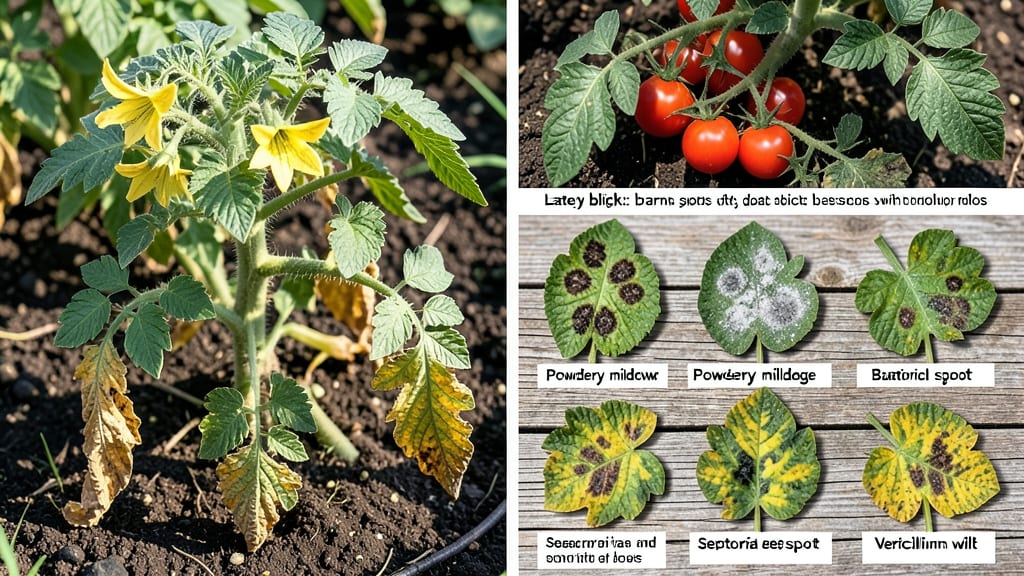
Identifying tomato plant diseases early is the key to saving your garden—if you know what to look for. 🌱 The moment you spot strange spots, wilting leaves, or stunted growth, you're dealing with one of the 15 fungal diseases that can turn a thriving harvest into a sad memory.
I've spent years diagnosing these issues in my garden, and I'm sharing the exact visual clues that help me catch problems before they spread.
Early blight starts with brown, concentric rings on lower leaves, while late blight creates greasy, dark spots that spread rapidly in damp weather. Powdery mildew coats leaves in white fuzz, and fusarium wilt causes sudden wilting despite healthy roots.
The key is acting fast—once these diseases take hold, they're nearly impossible to reverse. Prevention is your best weapon: resistant varieties, proper spacing, and keeping foliage dry.
You'll learn to recognize each disease by its unique symptoms and get targeted solutions—from organic sprays to cultural fixes—that actually work. The goal is simple: save your plants, protect your harvest, and avoid the heartbreak of losing your entire crop to something you could have stopped early.
Let's turn those mysterious symptoms into actionable fixes.
This isn't just about spotting problems—it's about understanding why they happen in your specific growing conditions. From humidity-loving late blight to soil-borne fusarium, we'll cover the root causes so you can adjust your growing practices.
Early detection isn't just smart gardening—it's the difference between a bountiful summer and a season of frustration.
Root Causes Behind Plant Troubles
Tomato plant diseases rarely appear out of thin air—they’re usually the result of environmental stress, microbial invaders, or poor growing conditions. Understanding why these issues flare up is the first step to prevention.
Below, we break down the real culprits behind fungal infections and other tomato plant woes, explained in clear, actionable science.
Fungi thrive in moist, stagnant environments, and tomato plants are prime targets. Here’s how spores invade:
- Wind and Water Spread 🌧️💨 Fungal spores (like those causing early blight or late blight) float in the air or hitch rides on rainwater.
Once they land on leaves or stems, they germinate in high humidity (70%+) or prolonged leaf wetness (10+ hours). Early blight (Alternaria solani) spreads via windblown spores from infected plant debris, while late blight (Phytophthora infestans) travels on water droplets during storms.
- Poor Air Circulation 🌀 Crowded plants or dense foliage trap moisture, creating the perfect fungal buffet. Without airflow, spores linger on surfaces, increasing infection risk. Solution: Space plants 18–24 inches apart and prune lower leaves to improve ventilation.
- Overhead Watering 💦 Splashing water from hoses or sprinklers can splash spores directly onto leaves. Drip irrigation or soaker hoses keep foliage dry, reducing fungal entry points.
Not all threats come from above—some lurk in the soil, waiting for the right conditions to strike.
- Compromised Soil Health 🔬 Overworked, nutrient-depleted, or waterlogged soil weakens plants, making them susceptible to root rot (Fusarium or Verticillium wilt).
These fungi enter through root wounds or cracked stems during transplanting. - Test your soil: Aim for a pH of 6.0–6.8 and amend with compost to boost microbial balance. - Rotate crops: Avoid planting tomatoes (or nightshades) in the same spot yearly to starve soil-borne pathogens.
- Excessive Moisture 💧 Tomato roots need consistent moisture, but too much creates anaerobic conditions where fungi like Pythium thrive. Symptoms? Wilting despite wet soil (a classic sign of root rot). - Fix it: Improve drainage with raised beds or sand amendments.
Use mulch to regulate soil temperature and moisture.
Plants under stress are like open doors for diseases. Here’s what weakens tomato defenses:
- Temperature Swings ❄️☀️ Sudden drops below 50°F (10°C) or heatwaves above 90°F (32°C) shock plants, slowing growth and reducing resistance. Late blight thrives in cool, wet conditions (60–75°F / 15–24°C), while powdery mildew loves hot, dry heat.
- Pro tip: Use shade cloth in summer and row covers in spring to moderate extremes.
- Nutrient Imbalances 🍽️ Too much nitrogen (lush green leaves but weak stems) or deficient phosphorus/potassium (poor root development) make plants vulnerable. Early blight exploits nitrogen-rich, fast-growing foliage.
- Balance act: Use a 5-10-10 or 10-10-10 fertilizer and side-dress with compost for steady nutrients.
- Physical Damage ⚔️ Cuts from pruning, hail, or pests create entry points for fungi like Fusarium. Even insect bites (e.g., from aphids or hornworms) can trigger secondary infections.
- Prevent breaks: Use sharp, sterilized tools and treat pests promptly.
Sometimes, well-meaning gardening habits backfire. Here’s how:
- Ignoring Plant Debris 🗑️ Leaving infected leaves or stems in the soil over winter preserves fungal spores. Early blight overwinters in plant residue, ready to reinfect next season.
- Cleanup routine: Remove all plant material at season’s end and compost only disease-free debris.
- Over-Fertilizing 💥 Excessive fertilizer (especially nitrogen) promotes soft, tender growth that fungi love to munch on. Powdery mildew often strikes when plants are overfed.
- Rule of thumb: Follow package rates and water deeply after fertilizing to leach excess salts.
- Skipping Sterilization 🧼 Reusing containers, tools, or trellises without cleaning spreads pathogens. Verticillium wilt can survive on tools for years.
- Sterilize tools: Soak in 1 part bleach to 9 parts water (or 70% isopropyl alcohol) between uses.
Healthy soil isn’t just about nutrients—it’s a battlefield between helpful microbes and pathogens.
- Good Guys vs. Bad Guys
- Beneficial microbes (like Trichoderma fungi or Bacillus subtilis) outcompete pathogens for space and nutrients.
- Bad guys (e.g., Phytophthora, Fusarium) thrive when beneficial microbes are absent.
- Boost defenses: Apply compost tea, mycorrhizal fungi, or beneficial bacteria (e.g., Serenade or Actinovate) at planting.
- Weakened Plant Immunity 🛡️ Just like humans, plants get sick when their immune systems are down. Drought stress, nutrient deficiencies, or chemical burns from over-fertilizing suppress resistance.
- Strengthen plants: Use seaweed extract or hydrogen peroxide spray (3%) as a foliar tonic to boost natural defenses.
Quick Fixes for Tomato Troubles
Tomato plants can fall victim to a variety of fungal diseases, but the good news is that most issues are manageable with the right approach. Below, we’ll map out practical, step-by-step solutions for each common problem, along with prevention tips to keep your plants thriving.
Think of this as your emergency repair guide—no green thumb required!
**🔥 *Cause:** Alternaria solani fungus thrives in warm, humid conditions, causing concentric brown spots on lower leaves.
**👨🍳 *How to Treat It:** 1. Prune aggressively – Remove and destroy (don’t compost!) all infected leaves. Aim for 2–3 inches below the first signs of brown spots to stop the spread.
- Fungicide spray – Use a copper-based fungicide (like Bordeaux mixture) or a baking soda spray (1 tsp baking soda + 1 quart water + a drop of dish soap). Spray every 7–10 days until new growth appears.
- Improve airflow – Space plants 18–24 inches apart and stake or cage them to prevent leaves from touching the soil.
💡 *Prevention Pro Tips:**
- Rotate crops – Avoid planting tomatoes (or potatoes/peppers) in the same spot for 3+ years.
- Mulch heavily – Use straw or grass clippings to keep soil moist but prevent splashing spores onto leaves.
- Water at the base – Never wet foliage, especially in the evening (fungi love damp leaves overnight).
🍳 *Cause:** Phytophthora infestans spreads rapidly in cool, wet weather, causing greasy-looking brown spots that turn leaves black.
**🔪 How to Treat It (Emergency Mode!): 1. Isolate infected plants – Move them at least 10 feet away from healthy ones to prevent spores from spreading via wind or water.
- Spray with fungicide – Use a chlorothalonil-based fungicide (like Daconil) immediately and repeat every 5–7 days for 2–3 weeks.
- Remove all plant debris – Burn or bag infected leaves/stems—this fungus overwinters in old plant matter.
🌡️ Prevention Pro Tips:**
- Plant resistant varieties – Look for ‘Mountain Merit’ or ‘Defiant PhR’ (both tolerate late blight).
- Avoid overhead watering – Use drip irrigation and water early in the day so leaves dry quickly.
- Crop rotation is non-negotiable – This fungus survives in soil for years, so rotate with non-nightshade crops (beans, lettuce).
⏰ *Cause:** Septoria lycopersici creates tiny dark spots with light centers, often appearing after rain.
**👨🍳 How to Treat It: 1. Prune infected leaves – Cut off only the worst spots (not whole leaves) and sterilize pruners with rubbing alcohol.
- Apply fungicide – Use a fixed copper fungicide (like Cueva) or neem oil spray (2 tbsp neem oil + 1 quart water + soap). Spray every 10–14 days.
- Boost plant health – Fertilize with compost tea or a balanced 10-10-10 to strengthen defenses.
🎯 Prevention Pro Tips:**
- Space plants properly – 36+ inches apart for better airflow.
- Avoid wetting leaves – Water only at the base and never when rain is forecasted.
- Solarize soil – If this is a recurring issue, cover soil with clear plastic for 4–6 weeks in summer to kill fungus.
🔥 *Cause:** Oidium fungus creates white, powdery patches on leaves, blocking sunlight and stunting growth.
**🥘 How to Treat It:
- Wipe leaves – Use a soft cloth dipped in soapy water (1 tsp mild soap + 1 quart water) to gently scrub infected areas.
- Spray with fungicide – Sulfur-based sprays (like Liqui-Cop) or baking soda spray work well.
Apply every 7–10 days. 3. Improve sunlight – Mildew loves shade—prune nearby plants to ensure 6+ hours of direct sun.
✨ Prevention Pro Tips:**
- Plant mildew-resistant varieties – Try ‘Super Sweet 100’ or ‘Celebrity’.
- Use reflective mulch – White plastic mulch increases light exposure and deters fungus.
- Avoid nitrogen-heavy fertilizers – Too much nitrogen = soft, mildew-loving leaves. Use low-nitrogen, high-phosphorus instead.
🔪 Cause: Soil-borne fungi that clog plant vessels, causing yellowing, wilting, and stunted growth (often fatal).
💡 How to Manage It (Since There’s No Fix):
- Remove infected plants – Do not compost—bag and discard to prevent soil contamination.
- Solarize or fumigate soil – Cover soil with clear plastic for 6 weeks in summer to kill fungi.
- Plant resistant varieties – Try ‘Mountain Merit’ (resistant to Verticillium) or ‘Bingo’ (tolerates Fusarium).
🌡️ *Prevention Pro Tips:
- Test your soil – pH 6.0–6.8 helps suppress these fungi.
- Rotate crops aggressively – 4+ years before replanting tomatoes in the same spot.
- Use raised beds with fresh soil – If your garden is infested, new soil is your best bet.
Final Thought: Most tomato diseases are preventable with good hygiene, airflow, and smart watering. Act fast when you spot trouble, and your plants will reward you with juicy, disease-free tomatoes** all season! 🍅💪
Frequently asked questions
How do I tell the difference between early blight and late blight on my tomato leaves?
Early blight shows up as brown, concentric rings starting on lower leaves, while late blight creates greasy-looking dark spots that spread rapidly in cool, wet conditions. Early blight targets older leaves first, whereas late blight attacks younger foliage and fruit. The key difference? Late blight spreads 10x faster and can destroy plants in days.
Can I still save my tomato plants if they have powdery mildew?
Yes, but act fast! First, wipe infected leaves with a soapy water cloth, then spray with sulfur or neem oil every 7-10 days. Improve airflow by spacing plants 18-24 inches apart and prune lower leaves to boost sunlight. Resistant varieties like 'Super Sweet 100' help prevent future outbreaks.
Why are my tomato plants wilting even though the soil is wet?
This classic symptom often signals root rot (from Pythium or Fusarium) or Verticillium wilt. Check roots - if they're brown/mushy, it's rot. For wilt, look for yellowing leaves and stunted growth. There's no cure for soil-borne wilts, but you can solarize soil (cover with plastic for 6 weeks) and plant resistant varieties like 'Mountain Merit'.
Is it safe to compost tomato leaves with disease spots?
Never compost infected plant material! Fungal spores survive composting and can reinfect your garden. Instead, bag and discard infected leaves in sealed plastic bags. For early blight, burn debris if possible. Even "cured" compost can harbor Alternaria spores for years.
How often should I spray my tomatoes as a preventive measure?
For disease prevention, apply a copper fungicide or baking soda spray every 2-3 weeks during growing season, especially after rain. Start spraying when plants hit 6 inches tall and continue until harvest. The key is consistency - don't wait until you see symptoms to begin.