
How To
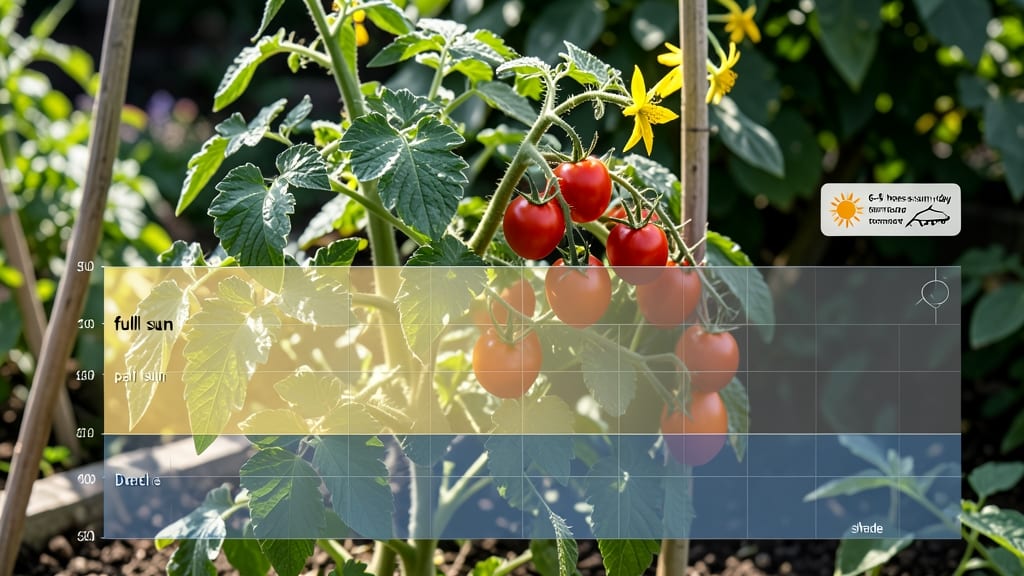
How much sun do tomato plants need? They thrive with 6 to 8+ hours of direct sunlight daily to produce the juicy fruits you crave 🍅 — but the exact amount depends on your variety and climate.
If you’ve ever watched your tomato plants wilt midday or turn a sad shade of pale green, you’re not alone. Too little sun stunts growth, while too much can scorch leaves before fruit even sets.
The good news? With the right placement and a few simple adjustments, you can hit the sweet spot for maximum yield—even in less-than-ideal spots.
Determinate tomatoes (like cherry varieties) handle partial shade better than sprawling indeterminate types, while heirlooms often demand extra light. I’ll break down the exact hours by variety, plus how to spot sun stress and fix it before it’s too late.
Ready to turn your garden into a tomato powerhouse? You’ll learn how to position plants for peak sunlight, work with shade, and even boost light in tight spaces—no green thumb required.

Tomato sunlight requirements by variety: full sun vs. partial shade needs
Tomatoes are sun-worshippers, but not all varieties crave the same amount of light. While most need 6-8 hours of direct sunlight daily, heirlooms and tropical varieties often demand more, while determinate types can tolerate slight shade.
The key is understanding your plant’s growth habit and climate. In temperate zones, afternoon shade helps prevent sunscald, but in hot desert climates, morning shade protects young seedlings from scorching.
Indeterminate tomatoes—like the classic Brandywine or Sungold—thrive with 8+ hours of sun and continuous fruiting. These vining giants need full exposure to produce their signature long harvests.
Meanwhile, determinate varieties such as Roma or Patio tomatoes can handle 5-6 hours of sun in partial shade, making them ideal for container gardens or north-facing plots.
Heirloom tomatoes often require more sunlight than hybrids due to their slower growth and larger fruit. Varieties like Cherokee Purple or Black Krim need full sun (6-8+ hours) to develop their deep flavors and vibrant colors.
Hybrids, however, are bred for efficiency and may perform well with 6 hours of sun, especially in cooler climates where intense afternoon sun isn’t an issue.
Climate plays a huge role in sunlight needs. In tropical regions, tomatoes can suffer from heat stress with too much midday sun, so partial shade (30-50%) in afternoons is ideal.
Conversely, in high-altitude gardens (above 5,000 feet), UV intensity is higher, so morning sun with afternoon protection prevents leaf burn while still meeting the 6-hour minimum.
Here’s how to match your tomatoes to their sunlight sweet spot:
| Variety Type | Sunlight Needs | Best For | Climate Adjustments |
|---|---|---|---|
| Indeterminate (e.g., Sungold, Brandywine) | 8+ hours full sun | Trellises, large gardens | Afternoon shade in hot climates |
| Determinate (e.g., Roma, Patio) | 6-7 hours full sun | Containers, small spaces | Tolerates partial shade in cool zones |
| Heirloom (e.g., Cherokee Purple, Black Krim) | 7-8+ hours full sun | Flavor development | Morning sun + afternoon shade in deserts |
| Hybrid (e.g., Early Girl, Celebrity) | 6-7 hours full sun | High-yield efficiency | Adapts to partial shade in north zones |
| Tropical (e.g., Pineapple, Green Zebra) | 6-7 hours with afternoon shade | Humid climates | 30-50% shade in peak heat |
| High-Altitude (e.g., Mountain Magic) | 7-8 hours with morning sun | Cooler regions | Afternoon protection from UV |
For container-grown tomatoes, even 5-6 hours of sun can work if you rotate pots weekly to ensure even exposure. Smaller varieties like Tiny Tim or Balcony Red are perfect for balconies or patios with partial shade.
Just avoid placing them in deep shade, where they’ll produce small, bland fruit or none at all.
If your garden has morning sun only, prioritize indeterminate varieties—they’ll stretch toward the sun and still produce. Use reflective surfaces like white gravel or aluminum foil near containers to bounce extra light onto leaves.
In afternoon-dominant sun areas, opt for determinate types or provide dappled shade with sheer curtains or lattice.
Pro tip: Monitor your tomatoes’ leaf color and fruit development. Yellowing leaves or pale fruit signal insufficient sunlight, while crispy edges or sunken spots mean too much direct heat.
Adjust stakes, trellises, or shade cloths as needed to strike the perfect balance—because happy tomatoes make juicy, flavorful harvests!
Signs your tomatoes aren’t getting enough (or too much) sunlight
Tomatoes thrive under full sun, but subtle shifts in sunlight can spell disaster for your harvest. Too little light leads to weak, spindly plants, while too much can cause leaf scorch and bitter fruit. The key is recognizing early warning signs before they damage your plants.
Start by checking your plants for yellowing leaves—a classic sign of sun deprivation. If you notice older leaves turning pale or developing a light green hue, your tomatoes aren’t getting enough sunlight. This often happens in morning-only sun spots or under tall structures casting afternoon shade.
Another red flag is blossom drop, where flowers fall off before setting fruit. This occurs when plants receive inconsistent sunlight, especially during hot afternoons. Even 6-8 hours of sun can cause this if the light isn’t direct or if temperatures spike.
🚨 WARNING: Tomato Sunlight Mistakes You’re Probably Making 🚨
⚠️ Sunlight Shock ⚠️
Tomatoes need gradual sun exposure. Moving them from shade to full sun too quickly causes leaf burn or wilting. Acclimate plants over 5-7 days by increasing sunlight by 2 hours daily.
⚠️ Afternoon Shade Trap ⚠️
Many gardeners assume morning sun is enough, but tomatoes need afternoon light (2 PM–6 PM) for photosynthesis. If your plants are near trees or fences, they may get only 3-4 hours of sun, stunting growth.
⚠️ Overhead Shade Net Misuse ⚠️
Using shade cloth with >30% coverage reduces light too much, even in hot climates. For tomatoes, stick to 10-20% shade during peak sun (11 AM–3 PM) to prevent fruit sunscald.
On the flip side, leaf scorch—crispy, brown edges on leaves—means your tomatoes are getting too much direct sun. This often happens in containers without shade or on south-facing walls. If you see this, provide light afternoon shade (3–4 PM) or move plants to a slightly shadier spot.
Stunted growth is another clue. If your tomato plants are shorter than expected (e.g., a 6-foot indeterminate variety stays under 3 feet), they’re likely light-deprived. Check for nearby obstructions like tall weeds or overhanging branches blocking sunlight.
Fix these issues by relocating plants to a south-facing spot with 6+ hours of direct sun or using reflective surfaces (like white mulch) to bounce extra light onto leaves. For containers, move them to avoid afternoon shade, and prune lower leaves to improve airflow and light penetration.