
How To
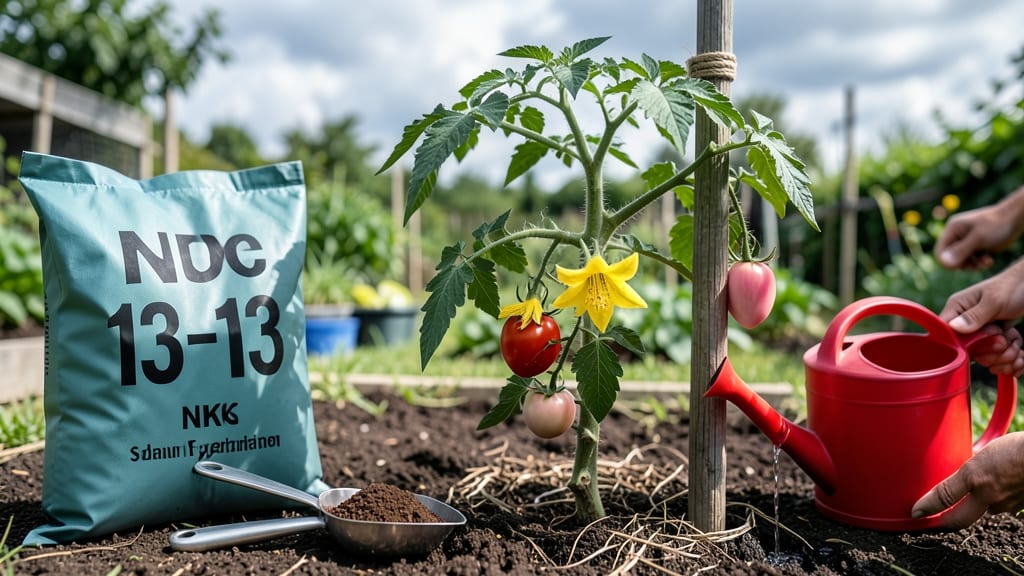
To get the most from your tomato plants with 13-13-13 fertilizer, start with just 1 tablespoon per plant at planting—then adjust as they grow.
Too much fertilizer burns roots, while too little leaves your 🍅 plants weak and underproducing. The key is timing: feed lightly when seedlings sprout, ramp up during flowering, and taper off as harvest nears.
This balanced approach prevents common mistakes like blossom end rot or leaf scorch, which even experienced gardeners fall for. I’ll walk you through the exact schedule—from seedling to ripe fruit—so you never guess again.
By the end, you’ll know when to feed, how often, and what to watch for. Ready to turn your tomatoes into the star of the garden?

13-13-13 Fertilizer dosage for tomato plants: exact measurements by growth stage
A 13-13-13 fertilizer provides equal parts nitrogen, phosphorus, and potassium—perfect for tomato plants at every growth stage. But dosage matters: too much causes root burn, while too little starves your vines.
The key is timing and precision. For seedlings, start light; for flowering and fruiting, increase gradually. Always apply in the morning to avoid leaf burn from evening moisture.
Before fertilizing, test your soil pH—tomatoes thrive at 6.0-6.8. If your soil lacks nutrients, amend with compost first. Organic alternatives like fish emulsion or compost tea can replace synthetic 13-13-13 if you prefer natural options.
Below, I break down exact measurements for granular and liquid forms by growth stage, so you can feed your plants without guesswork.
For liquid 13-13-13, always dilute it first—never apply undiluted. Mix 1 teaspoon per gallon of water for seedlings and 1.5 teaspoons per gallon for fruiting plants. Water thoroughly after applying to prevent salt buildup in the soil.
If using granular fertilizer, sprinkle it around the drip line (not the stem) and water it in immediately. This ensures nutrients reach the roots without damaging the plant.
Tomatoes in containers need half the dosage—stick to ½ teaspoon granular or ¼ teaspoon liquid per feeding. Container plants dry out faster, so monitor soil moisture closely.
If you notice yellow leaves or stunted growth, your plants may need more nitrogen. Conversely, leaf burn or blossom end rot signals over-fertilization. Adjust your schedule accordingly.
If your soil is already rich in nutrients, reduce the dosage by 25-30%. Conduct a simple soil test (available at garden centers) to check nitrogen, phosphorus, and potassium levels.
For example, if your soil tests high in phosphorus, skip the flowering-stage boost. Organic gardeners can replace 13-13-13 with compost tea (1:10 ratio) or a homemade blend of banana peels (potassium) and crushed eggshells (calcium).
Timing is critical—never fertilize when plants are stressed (e.g., after transplanting or during extreme heat). Always apply fertilizer in the early morning so nutrients absorb before the heat of the day. Avoid fertilizing within 2 weeks of harvest to ensure your tomatoes are safe to eat.
For heirloom varieties, which are more sensitive, cut back to 50% of the recommended dose to prevent overgrowth.
Pro tip: Mix 13-13-13 with compost for a slow-release boost. Spread a ½-inch layer of compost around the base of your plants, then top-dress with granular fertilizer. This mimics natural nutrient cycles and reduces the risk of burn.
Always water deeply after fertilizing to help nutrients penetrate the soil. If you’re using hydroponics, dissolve ½ teaspoon of 13-13-13 per gallon of water and feed your plants every 7-10 days during the fruiting stage.
Remember, consistency beats quantity. Stick to the schedule, and your tomato plants will reward you with bushier vines, more flowers, and heavier fruit sets.
Keep a gardening journal to track which stages respond best to fertilizer—you might discover your plants thrive on slightly less or more at certain times. Happy growing!
Common mistakes when fertilizing tomatoes with 13-13-13 (and how to avoid them)
Even experienced gardeners sometimes overlook the nuances of 13-13-13 fertilizer for tomatoes. Too much can lead to leaf burn or blossom end rot, while too little stunts growth and reduces fruit production.
The key is balancing nitrogen, phosphorus, and potassium with your plant's needs at each growth stage.
One of the biggest mistakes is applying 13-13-13 too early in the season. Young seedlings need less nitrogen to avoid leggy growth. Wait until your plants are 6 inches tall and have developed their first true leaves before introducing fertilizer. This prevents root burn and encourages strong root systems.
⚠️ CALLOUT-WARNING
Seedlings: 0.5 tsp per plant (max) when 6" tall
Flowering: 1 tbsp per plant every 3-4 weeks
Fruiting: 1.5 tbsp per plant every 4-6 weeks
Never exceed 2 tbsp per plant in one season—this causes nutrient toxicity and leaf scorch.
Another common error is over-fertilizing during fruiting. When tomatoes are producing fruit, they need more potassium than nitrogen. Too much nitrogen at this stage leads to lush foliage but few tomatoes.
Switch to a lower-nitrogen fertilizer (like 5-10-10) or reduce your 13-13-13 dose by half when fruit sets appear.
Watch for signs of under-fertilization, too. Yellowing leaves (especially older ones) signal nitrogen deficiency, while purple stems or slow growth indicate phosphorus or potassium shortages.
If you notice these symptoms, apply a diluted solution (1 tsp per gallon of water) and monitor closely. Overcorrecting can be just as harmful as neglect.
Seasonal timing matters just as much as dosage. In spring, focus on root development with lighter feeds. By summer, when your plants are flowering and fruiting, increase the frequency to every 3-4 weeks.
Stop fertilizing entirely 4-6 weeks before frost to allow plants to harden off for winter.
Finally, always water deeply after fertilizing to help nutrients reach the roots. Shallow watering leaves fertilizer sitting on the soil surface, which can burn roots or attract pests. Pair your feeding schedule with mulching to retain moisture and regulate soil temperature—this helps your tomatoes absorb nutrients efficiently without stress.