
Planting
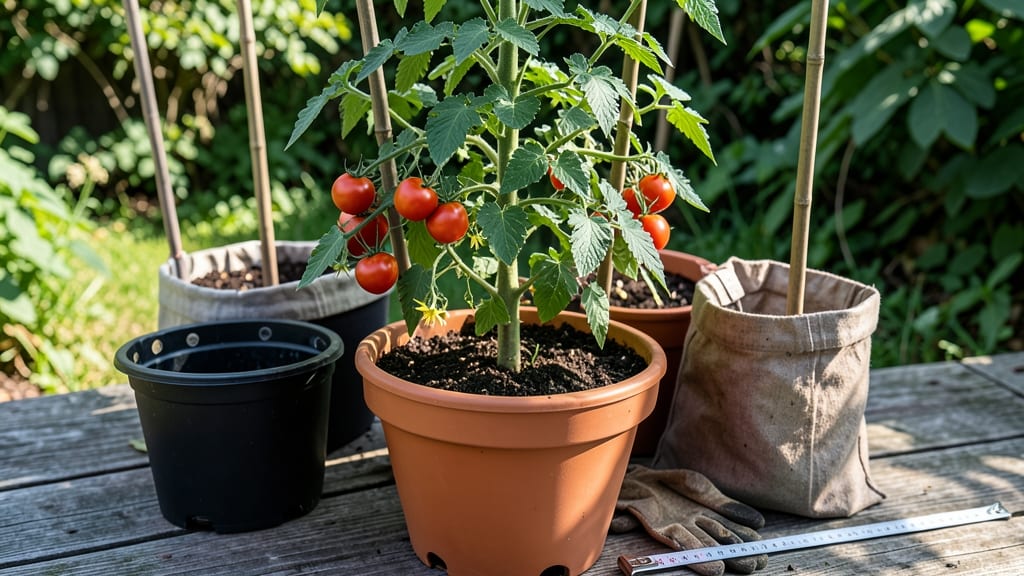
To determine how many gallon pots for tomato plants, use 5-gallon containers for small varieties like cherry tomatoes, 5-7 gallons for medium-sized indeterminate types, and 7-10 gallons for large determinate or heirloom varieties to support healthy root growth and fruit production. Dwarf varieties may thrive in 3-5 gallons, while sprawling vines need deeper containers for stability.
Container size directly impacts a tomato plant's ability to grow strong roots and produce abundant fruit. 🌱 Smaller pots restrict root expansion, which can stunt growth and reduce yields—especially for larger varieties that need more space to anchor themselves.
For example, compact cherry tomato varieties like 'Tumbling Tom' do well in 5-gallon pots, while sprawling indeterminate types such as 'Sungold' often outgrow their containers without 7-10 gallons. The key is matching the pot size to both the plant's mature size and its root system's depth requirements.
Beyond size, consider the pot's depth—shallow containers can lead to root binding, where roots circle the bottom and choke off nutrients. 💫 Larger pots also help maintain moisture levels longer, reducing the need for frequent watering.
If you're growing in containers, aim for pots that are at least 12 inches deep for most varieties, with drainage holes to prevent waterlogging. This ensures your tomato plants have the space they need to thrive throughout the growing season.
💡 In This Article
- Tomato Root Systems and Container Size Requirements
- Best Tomato Varieties for Small vs Large Pots
Tomato root systems and container size requirements
Tomato roots spread both wide and deep, with the root ball typically growing to about 12-18 inches in diameter and 18-24 inches deep when mature. 🌱 This means a 5-gallon pot (about 12" deep) works for small varieties because their roots stay compact, but larger types like beefsteak tomatoes need 10+ gallons to accommodate their extensive root systems.
The root zone must also breathe—confined spaces without proper aeration lead to anaerobic conditions, where roots suffocate and nutrients become inaccessible.
Indeterminate varieties, which grow continuously throughout the season, develop more extensive root systems than determinate types that produce fruit in one flush. For example, a Sungold cherry tomato (indeterminate) may need 7-10 gallons to support its sprawling vines, while a Roma tomato (determinate) thrives in 5-7 gallons.
Root depth is critical too—shallow pots cause roots to circle the bottom, a condition called "root binding," which restricts water and nutrient uptake, leading to stunted growth or even plant death.
Drainage and aeration become even more critical in containers.
Without proper drainage holes, water pools at the bottom, creating oxygen-deprived zones where roots rot. 💫 A well-draining potting mix with perlite or vermiculite helps, but the pot's size must match the plant's needs—too small, and roots compete for resources; too large, and excess soil stays damp, inviting fungal diseases like blight.
For sprawling varieties, consider fabric grow bags that allow roots to breathe while providing stability.
Container material also plays a role. Plastic pots retain moisture longer but can overheat in sun, while terracotta breathes better but dries out faster. Heavy ceramic pots offer stability for large varieties but may crack if roots expand too much.
The ideal pot balances size, material, and drainage—aim for 12-18 inches deep for most tomatoes, with 2-3 inches of space between the plant's base and the pot's rim to accommodate root spread.
Here’s how root systems translate to pot sizes:
- Cherry tomatoes (e.g., 'Sweet 100'): 5-gallon pots (roots stay shallow)
- Medium determinate (e.g., 'Celebrity'): 5-7 gallons (moderate root spread)
- Large indeterminate (e.g., 'Brandywine'): 10+ gallons (deep, sprawling roots)
- Dwarf varieties (e.g., 'Tiny Tim'): 3-5 gallons (compact growth habit)