
Light Requirements
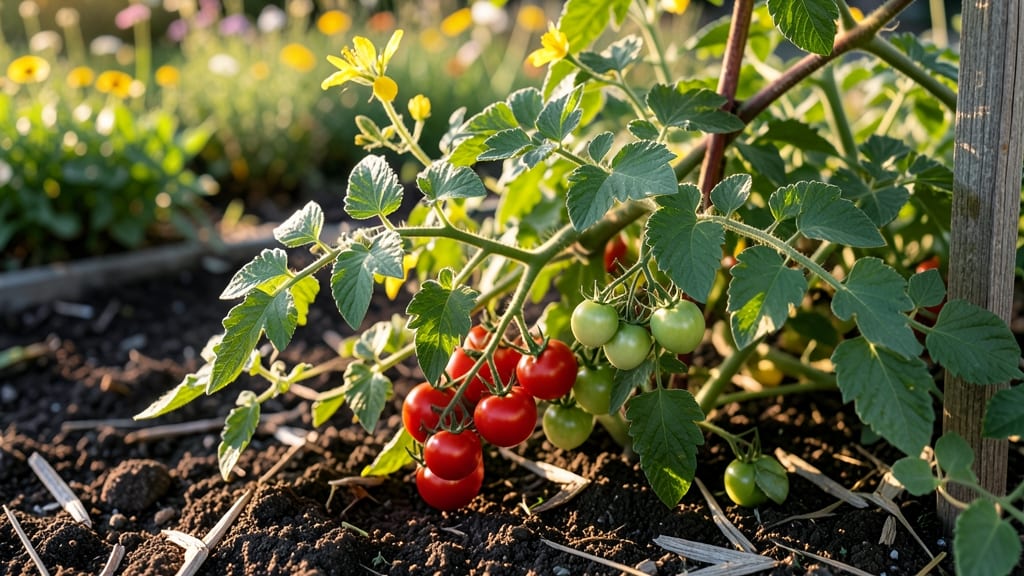
Understanding the cherry tomato sun requirements—six hours of direct sun—transforms your harvest from bland to bursting with flavor—that’s the magic number most gardeners miss. 🌞 I learned this the hard way when my first batch of tomatoes tasted more like water than sweet summer fruit, despite my best efforts with fertilizer and watering.
The science is simple: cherry tomatoes need full sun (6+ hours daily) to develop their signature sweetness and vibrant color. Partial shade stretches out the ripening process, leaving you with pale, mealy fruit that lacks the depth of flavor you crave.
Even just an hour less sunlight can cut your harvest by nearly half. You’ll know you’ve got it right when vines thicken, leaves darken to a rich green, and clusters of tomatoes swell with juice.
The first ripe cherry tomatoes will taste like sunshine—sweet, tangy, and impossible to resist—proving that light isn’t just a requirement, it’s the secret ingredient. For shady spots, try reflective surfaces or move containers closer to the sun.
Even a few extra hours makes a difference in flavor and yield. Let’s get those tomatoes soaking up the light!
Light Deficiencies Explained
Understanding why cherry tomatoes struggle with sun exposure boils down to photosynthesis, plant physiology, and environmental stress—each playing a critical role in their growth and flavor. Let’s break down the key reasons why these vibrant plants may not thrive without adequate sunlight.
Cherry tomatoes rely on photosynthesis to convert sunlight, carbon dioxide, and water into glucose (their energy source). When they don’t get enough light:
- Chlorophyll production drops – The green pigment in leaves, essential for capturing sunlight, weakens, leading to pale or yellowing foliage.
- Energy shortages – Without enough glucose, the plant can’t fuel growth, flower production, or fruit development, resulting in stunted vines or small, bland tomatoes.
- Weak stems – Less energy means stems struggle to stay upright, increasing the risk of splitting or disease from poor structural support.
Actionable fix: Ensure your plants receive at least 6–8 hours of direct sunlight daily (more in cooler climates). If growing indoors, use full-spectrum grow lights (12–16 hours/day) to compensate.
Sunlight triggers flowering hormones (like florigen) in tomatoes. Without enough light:
- Blossom end rot – Calcium uptake drops due to slow photosynthesis, causing dark, leathery spots on fruit.
- Fewer flowers – Plants may produce leafy growth instead of blossoms, reducing yield.
- Weak pollination – Bees and wind rely on warm, sunny conditions to transfer pollen; cloudy days can lead to misshapen or seedless tomatoes.
Actionable fix:
- Hand-pollinate on cloudy days by gently shaking plants or using a small brush.
- Use reflective surfaces (like mirrors or white mulch) to bounce extra light onto leaves.
Too little sun can create a cool, damp environment that encourages:
- Fungal diseases (e.g., early blight, powdery mildew) – Moisture lingers on leaves without enough evaporation from sunlight.
- Pest infestations – Soft, weak stems attract aphids and whiteflies, which thrive in shaded, humid conditions.
- Slow ripening – Green tomatoes stay hard and unripe longer, delaying harvest and flavor development.
Actionable fix:
- Prune lower leaves to improve airflow and sunlight penetration.
- Space plants properly (18–24 inches apart) to prevent overcrowding, which blocks light.
Sunlight helps regulate nutrient absorption in the roots. Without it:
- Nitrogen fixation slows – Bacteria in the soil (like Rhizobium) rely on plant energy to convert nitrogen; weak photosynthesis means less available nitrogen for growth.
- Micronutrient deficiencies – Tomatoes may develop yellowing between veins (iron deficiency) or purple stems (phosphorus deficiency) due to poor energy production.
Actionable fix:
- Test soil pH (ideal: 6.0–6.8) and amend with compost or a balanced fertilizer (10-10-10) if needed.
- Water deeply but less frequently to encourage strong root growth toward sunlight.
Not all sun-related issues stem from placement—weather and location play a role:
| Factor | Problem | Solution |
|---|---|---|
| Short daylight hours (early/late season) | Slows growth; tomatoes ripen poorly. | Use row covers to extend warmth. |
| Overcast skies | Reduces light intensity by 30–50%. | Supplement with grow lights. |
| High humidity | Traps heat, causing sunscald on fruit. | Improve airflow with trellises. |
| Northern latitudes | Weaker sun angle in summer. | Choose early-maturing varieties. |
Actionable fix:
- Monitor local sunlight hours (use a sunlight tracker app) to adjust care.
- Mulch with straw to regulate soil temperature and retain moisture without smothering plants.
Pro Tip: 💡 If your tomatoes are leggy or pale, they’re begging for more light! Move containers to sunnier spots or invest in a south-facing window or grow light—your harvest will thank you.
Fixing Sunlight Struggles for Cherry Tomatoes
Now that you understand why your cherry tomatoes might be struggling with sunlight, let’s turn things around with practical, step-by-step solutions. Whether your plants are wilting, producing bland fruit, or just not thriving, these fixes will help you optimize their sun exposure—without complicated setups or costly tools.
Problem: Your cherry tomatoes aren’t getting enough sunlight (less than 6 hours of direct light daily).
Solution: Move your plants to a sunnier spot immediately. Even a few extra hours of sunlight can make a dramatic difference.
- 🔥 Relocate Containers: If growing in pots, shift them to a south-facing window, balcony, or patio. South-facing areas get the most sunlight in the Northern Hemisphere. - 🍳 Adjust Garden Layout: If in the ground, thin out taller plants (like corn or sunflowers) blocking sunlight.
Rotate plants so they face south. - 👨🍳 Use Reflective Surfaces: Place a white sheet, mirror, or even a light-colored wall behind your plants to bounce extra light onto their leaves.
Prevention Tip: 💡 Plan ahead! When planting, choose a location with minimum 6–8 hours of direct sun before committing. If space is limited, opt for compact cherry tomato varieties that thrive in partial sun (though flavor may suffer).
Problem: Your tomatoes are getting too much direct sun, causing leaf burn, wilting, or stunted growth (common in hot climates or midday sun).
Solution: Balance sunlight with shade and airflow to prevent heat stress.
- ⏰ Prune for Airflow: Thin out lower leaves to improve air circulation, reducing heat buildup.
Focus on removing leaves touching the ground or crowded stems. - 🌿 Provide Afternoon Shade: Use shade cloth (30–50% coverage) on the west or southwest side of your plants during peak heat (12–4 PM).
Avoid full shade—tomatoes still need direct morning sun. - 🥘 Mulch to Cool Roots: Apply 2–3 inches of mulch (straw, grass clippings, or wood chips) to keep soil temperatures stable and retain moisture.
Prevention Tip: ✨ Start slow! If transplanting seedlings, acclimate them to full sun gradually over 5–7 days to avoid shock.
Problem: Your tomatoes are getting patchy sunlight (e.g., dappled shade from trees or buildings), leading to weak stems or poor fruit set.
Solution: Create a consistent light environment with minimal effort.
- 🔪 Rotate Plants Weekly: Turn containers or stakes 180 degrees every 3–4 days so all sides get equal exposure. - 🌳 Trim Overhanging Branches: Prune nearby trees or shrubs to allow uninterrupted sunlight for at least half the day. - 📊 Use Vertical Growing: Train tomatoes on trellises, cages, or stakes to lift them above obstructions.
This also improves airflow and reduces disease risk.
Prevention Tip: 🎯 Monitor light patterns! Observe your garden from sunrise to sunset for 1–2 days to identify shaded spots before planting.
Problem: You’re in a low-light area (e.g., apartment balcony, north-facing yard, or urban jungle) and can’t relocate plants.
Solution: Use grow lights as a last resort—but do it right to avoid leggy, weak plants.
- 💡 Choose the Right Lights:
- LED grow lights (full-spectrum) are energy-efficient and mimic sunlight.
- Fluorescent lights (T5 or T8) work for small setups but require closer placement.
- 🕒 Set a Light Schedule:
- Provide 14–16 hours of light daily (tomatoes need more than natural daylight in winter).
- Position lights 6–12 inches above plants and adjust as they grow.
- 🌿 Combine with Natural Light: Place grow lights near a sunny window to supplement, not replace, sunlight.
Prevention Tip: 🔥 Avoid over-lighting! Too much artificial light can cause leaf burn—stick to the recommended distance and duration.
Final Checklist for Happy Cherry Tomatoes: ✅ 6+ hours of direct sun (morning sun is best). ✅ Afternoon shade in extreme heat. ✅ Good airflow (prune, stake, and space plants). ✅ Consistent moisture (mulch to retain water). ✅ Supplement with grow lights only if natural light is truly insufficient.
With these fixes, your cherry tomatoes will thrive, produce sweeter fruit, and grow stronger—no guesswork required! 🍅✨
Frequently asked questions
What happens if cherry tomatoes get less than 6 hours of sunlight?
They’ll produce fewer fruits with pale, bland flavors and may develop weak stems. Without enough light, photosynthesis slows, causing stunted growth and poor nutrient absorption. Expect smaller harvests and delayed ripening—sometimes by weeks!
Can cherry tomatoes grow in partial shade?
Yes, but expect reduced yields and less sweetness. They’ll tolerate 4–6 hours of sun (especially in hot climates), but flavor peaks with full sun. For shaded spots, choose compact varieties like 'Tiny Tim' and supplement with reflective surfaces.
How do I know if my tomatoes are getting enough sun?
Check for dark green, sturdy leaves and thick vines. If leaves are pale or leggy, they’re light-starved. Look for 6+ hours of direct sun (use a sunlight tracker app) or move plants closer to a south-facing window/area.
What’s the best time of day for cherry tomato sunlight?
Prioritize morning sun (6 AM–12 PM) for best results. Afternoon sun (especially in hot climates) can cause leaf burn. If your area gets intense midday heat, provide 30–50% shade cloth during peak hours (1–4 PM).
Will grow lights work for indoor cherry tomatoes?
Use full-spectrum LED lights (12–16 hours/day) positioned 6–12 inches above plants. Place lights near a sunny window to supplement natural light. Avoid over-lighting—too much can cause leaf burn or leggy growth.