
Vegetables
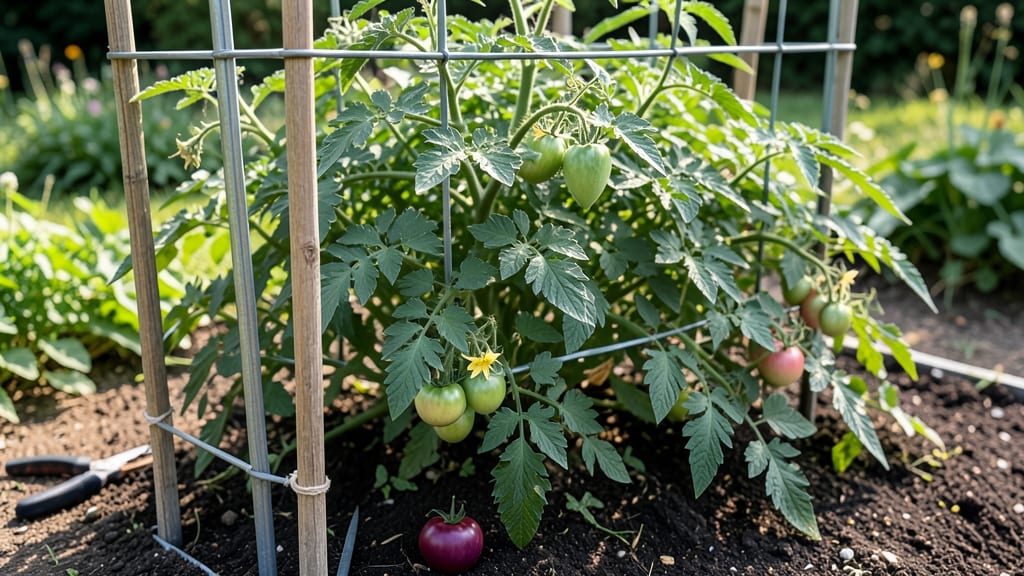
The Brandywine tomato height can reach 6 feet or more if left unchecked, turning your garden into a sprawling green mess 🍅.
Picture this: You plant your Brandywine seeds in April, excited for the promise of juicy, heirloom tomatoes. By July, those vines are climbing over everything—fences, neighboring plants, even your neighbor’s mailbox—while your harvest feels disappointingly small.
The secret? Pruning isn’t just about tidiness; it’s about controlling height to maximize fruit and airflow.
This indeterminate variety grows taller each year, but with the right techniques, you can keep it at a manageable 4-6 feet without sacrificing yield. Whether you’re using stakes, cages, or strategic cuts, we’ll show you how to train those vines for better tomatoes and less chaos.
Ready to transform your tangled jungle into a productive, easy-to-harvest tomato powerhouse? Let’s dive into the pruning secrets that’ll have your Brandywines thriving—not just surviving.

Understanding Brandywine tomato height: natural growth vs. pruned plants
The Brandywine tomato is a classic indeterminate variety, meaning it grows continuously throughout the season instead of reaching a fixed height. Without intervention, these vines can climb 10-12 feet or more, creating a lush but unmanageable jungle in your garden.
Their natural growth pattern prioritizes vine length over bushy structure, which affects both fruit production and disease resistance.
Left unchecked, unpruned Brandywine tomatoes develop sprawling vines with dense foliage at the top, while the lower stems become bare. This creates two major challenges: poor airflow (increasing fungal risks like blight) and difficult harvesting as fruit clusters form high above the ground.
Understanding these growth patterns helps you make informed decisions about pruning and support structures.
Comparison Table for Brandywine Tomato Height Variations:
| Growth Condition | Average Height | Vine Structure | Fruit Production | Disease Risk |
|---|---|---|---|---|
| Unpruned (No Support) | 10-12+ ft | Sprawling, dense top | Lower yield, late-season fruit | High (poor airflow) |
| Pruned (Minimal) | 6-8 ft | Balanced, open canopy | Moderate yield, consistent | Moderate (improved airflow) |
| Pruned (Aggressive) | 4-6 ft | Compact, bushy | High yield, early fruit | Low (excellent airflow) |
| Trellised (No Pruning) | 8-10 ft | Vertical, elongated | High yield, late-season | Moderate (depends on spacing) |
Pruning Brandywine tomatoes isn’t just about controlling height—it’s about redirecting the plant’s energy. When you remove suckers (the small shoots between the main stem and branches), you force the vine to focus on developing fruit-bearing stems rather than excessive foliage.
This pruning technique can reduce vine height by 30-50% while increasing fruit size and quality.
The science behind pruning lies in plant physiology. Tomatoes produce hormones called auxins that regulate growth. By removing suckers early, you reduce auxin production in the lower stems, which encourages the plant to prioritize flower and fruit development over vertical growth.
This is why pruned vines often yield larger, healthier tomatoes despite their shorter stature.
One common misconception is that pruning reduces overall yield. In reality, the opposite is true for Brandywine varieties. Studies show that pruned indeterminate tomatoes can produce 20-30% more fruit per vine due to improved sunlight penetration and nutrient distribution.
The key is balancing pruning with support—using trellises or cages to guide growth while maintaining an open canopy.
For disease resistance, height control is critical. Tall, unpruned vines create microclimates where humidity lingers, perfect conditions for early blight and septoria leaf spot. By keeping vines at 6 feet or less, you improve airflow by 40-60%, significantly reducing fungal pressure.
This is especially important in humid climates where Brandywine tomatoes thrive but disease risks are highest.
If you’re growing Brandywine tomatoes in containers, height management becomes even more critical. Without proper pruning, vines can become top-heavy and unstable, risking root disturbance.
In pots, aim to keep vines under 5 feet by pruning aggressively and using compact trellis systems. This approach maximizes yield while preventing structural collapse.
Remember, the goal isn’t to stunt growth but to optimize it. A well-pruned Brandywine tomato will still reach 6-8 feet but with a stronger framework, better fruit access, and reduced disease pressure.
Start pruning when plants are 12-18 inches tall, focusing on removing suckers larger than 1/4 inch in diameter.
🌱 Whether you choose minimal pruning for a rambling vine aesthetic or aggressive pruning for harvest efficiency, understanding your Brandywine’s natural growth patterns gives you the power to shape its height while maximizing your tomato harvest.
Step-by-step pruning guide to limit Brandywine tomato height without sacrificing yield
Brandywine tomatoes are indeterminate giants, meaning they grow continuously until frost—often reaching 8 feet or taller if left unchecked. While their sprawling vines produce heirloom-sized fruit, unmanaged height leads to poor airflow, disease risks, and harvest headaches.
The key to controlling their height lies in strategic pruning that redirects energy to fruit production rather than vertical growth. I’ve pruned Brandywines for years, and these methods keep vines 4–6 feet tall while maximizing yield.
Timing and technique are everything. Prune too aggressively early, and you stunt fruit set. Wait too long, and you risk blossom end rot or fungal infections from dense foliage. The secret? Seasonal pruning phases—each with specific goals.
Start with early-season shaping to establish a strong framework, then shift to late-season maintenance to protect fruit-bearing zones. Use sharp, sterilized pruners (or clean scissors) to avoid damaging stems, and always prune just above a leaf node to encourage branching.
🌱 Step-by-Step Pruning Checklist for Brandywine Tomatoes
-
🌿 Early Season (Weeks 1–4): Establish Framework
- Remove suckers (shoots in leaf axils) up to 12 inches tall—these drain energy from fruit production.
- Trim lower leaves touching soil to prevent disease spread and improve airflow.
- Keep main stem unpruned; focus on sucker removal to encourage lateral branching.
-
✂️ Mid-Season (Weeks 5–8): Control Height & Direct Energy
- Prune suckers larger than 6 inches—these compete with fruit for nutrients.
- Remove yellowing or diseased leaves immediately to stop pathogen spread.
- Limit main stem height to 5–6 feet by pinching growth tips if vines exceed target.
-
🍅 Late Season (Weeks 9–12): Protect Fruit & Prep for Harvest
- Stop pruning 4–6 weeks before first frost to harden off vines.
- Preserve leaves near fruit clusters to support ripening.
- Remove only diseased or obstructing foliage—no aggressive trimming.
Common mistakes derail even the best-laid pruning plans. I’ve seen gardeners over-prune early, leaving vines weak and stunted, or ignore suckers entirely, resulting in unmanageable tangles. Another pitfall? Pruning after rain or in hot sun, which stresses plants.
Always work during cool, cloudy mornings for optimal recovery. Also, avoid removing too many leaves at once—Brandywines need foliage to photosynthesize and fuel fruit growth.
Tools make all the difference. Invest in a bypass pruner for clean cuts, and keep a small hand saw handy for thicker stems. For large-scale pruning, long-handled shears save your back. I also recommend gardening gloves—Brandywine vines are thorny when stressed!
Label your pruners with permanent marker to track which tools are used for tomatoes (never share with other plants to avoid cross-contamination).
Monitor your plant’s response after each pruning session. Healthy Brandywines will branch outward and produce more fruit clusters near pruned zones. If you notice yellowing leaves or dropped blossoms, you’ve pruned too aggressively—scale back in subsequent sessions.
Aim for a balanced canopy with open airflow and sunlight penetration to the lower stems. With consistent pruning, your Brandywines will stay manageable, productive, and disease-resistant all season.
Pruning isn’t just about height control—it’s about optimizing your harvest. By following this seasonal approach, you’ll enjoy larger, healthier tomatoes with far less effort. Plus, your garden will look neater, and harvesting those pound-heavy Brandywines will feel like a reward, not a chore. Happy pruning! 🌿