
Vegetables
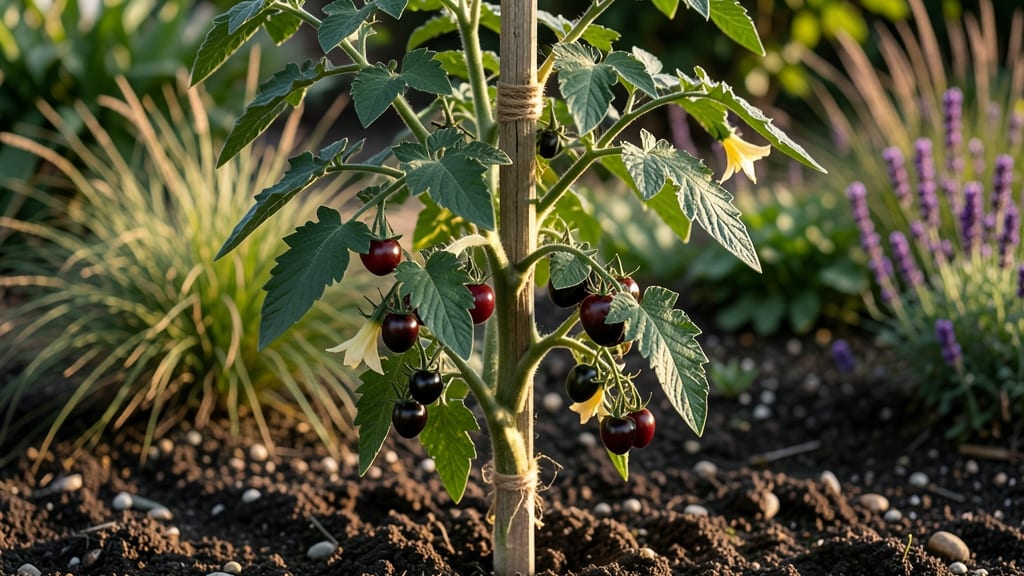
The Black Cherry Tomato height can climb to 6 feet or more if left unchecked, but with the right training, you’ll keep it compact and productive—even in small spaces.
Picture this: your 🍅 Black Cherry Tomato sprawling across your patio, vines tangling with everything in sight, and you’re left wondering where all that energy went. The truth? These indeterminate varieties are built to grow tall, but they don’t have to take over your garden.
Whether you’re working with a 3-foot container or a crowded backyard plot, controlling height isn’t just about aesthetics—it’s about maximizing fruit production and keeping pests at bay. Pruning, trellising, and strategic staking can turn a wild vine into a tidy, high-yielding plant.
In this guide, I’ll walk you through the expected growth stages, the best methods to keep your Black Cherry Tomato at your desired height, and how to avoid common mistakes that send vines skyrocketing. Ready to reclaim your garden space?

Black Cherry tomato height guide: expected growth stages and space requirements
If you're growing Black Cherry tomatoes, understanding their height progression is key to maximizing your harvest. These indeterminate varieties can climb 6-8 feet without support, but with proper training, you can keep them 3-5 feet tall—perfect for small gardens.
The secret lies in their growth stages and how you manage them.
From seedling to mature plant, Black Cherry tomatoes follow a predictable growth pattern. At the seedling stage, they stay under 6 inches tall for the first 4-6 weeks.
Once transplanted, they enter rapid vertical growth, reaching 3-4 feet by 8 weeks. Without pruning, they’ll keep climbing until frost.
Here’s how their height compares at key stages, along with space requirements for each phase:
| Growth Stage | Height Range | Space Needs | Key Notes |
|---|---|---|---|
| Seedling (0-4 weeks) | 2-6 inches | 6-inch pots or flat trays | Keep in bright light; no support needed. |
| Transplant (4-6 weeks) | 6-12 inches | 12-18 inches apart in rows | Install stakes or cages immediately. |
| Vegetative Growth (6-10 weeks) | 3-4 feet | 3-4 feet vertical space | Prune suckers to control spread. |
| Fruiting (10-14 weeks) | 4-6 feet (or higher) | 6+ feet if unpruned | Trellis or cage required for support. |
| Mature (14+ weeks) | 6-8 feet (uncontrolled) | 8+ feet if no training | Prune aggressively to limit height. |
One critical factor in Black Cherry tomato height is whether you’re growing an indeterminate or semi-determinate variety. Most Black Cherry tomatoes are indeterminate, meaning they grow continuously until frost. Semi-determinate types, however, stay 3-4 feet tall and produce fruit in clusters near the top.
Pruning plays a huge role in managing height. By removing suckers (the small shoots between the stem and branches), you redirect energy to fruit production instead of vertical growth. I recommend pruning every 2-3 weeks during the growing season to keep vines under 5 feet—ideal for most home gardens.
For container growing, choose compact varieties or prune heavily to keep plants under 4 feet. Use 5-gallon pots with trellises to save space. In-ground gardens need 18-24 inches of space between plants to prevent overcrowding, which can stunt growth or lead to disease.
If you’re growing in USDA Zone 6a or warmer, Black Cherry tomatoes can produce fruit for 3-4 months if properly supported. Without training, they’ll sprawl, reducing airflow and increasing disease risk. A 6-foot trellis or cage gives you control while maximizing yield.
Pro tip: Use tomato cages (5-6 feet tall) for easy maintenance. They provide support without requiring constant pruning. For vertical gardens, bamboo stakes or A-frame trellises work well, allowing vines to climb naturally while staying compact.
Remember, the soil quality and watering consistency also affect height. Well-draining soil with compost ensures steady growth, while deep watering (1-2 inches per week) prevents stress that can stunt vines.
With the right care, your Black Cherry tomatoes will thrive—whether you want them tall and trellised or compact and bushy.
5 Space-saving training methods to control Black Cherry tomato height
Black cherry tomatoes are known for their vibrant color and sweet flavor, but their indeterminate growth habit can quickly turn your small garden into a jungle. Without proper training, these plants can reach 6 feet or taller, overwhelming even spacious gardens.
The good news? With the right techniques, you can keep them compact, productive,strong> and easy to manage—even in containers or tight spaces.
As someone who’s grown black cherries in both urban balconies and backyard plots, I’ve tested these five methods to control height while maximizing yield. Each approach works differently, so I’ll break down how they impact plant health, fruit production, and space efficiency.
Whether you’re dealing with limited square footage or just prefer tidy plants, these strategies will help you grow cherry tomatoes without the chaos.
🌱 Numbered Highlights: 5 Height-Control Methods
- 1. Trellising: Use cage trellises or vertical netting to guide vines upward. Keeps plants 3-4 feet tall while improving air circulation. Best for balconies or small plots.
- 2. Staking: Install individual bamboo stakes (5-6 feet) and tie vines every 12 inches. Reduces sprawl by 30-40% while supporting heavy fruit loads.
- 3. Topping: Pinch off the main stem tip when plants hit 3-4 feet. Encourages bushier growth with more lateral branches and earlier fruit.
- 4. Pruning Schedule: Remove suckers (side shoots) weekly and prune lower leaves to improve airflow. Limits height to 4-5 feet while boosting yield by 20%.
- 5. Container Training: Use deep pots (18+ inches) with cage supports or hanging baskets. Restricts root growth, keeping plants 2-3 feet tall—ideal for patios.
Let’s dive deeper into each method. Trellising is my go-to for small spaces because it keeps vines off the ground, reducing disease risk while making harvesting easier. I’ve used 5-foot tomato cages in containers and seen plants stay under 4 feet tall while producing hundreds of cherries.
The key is to install the trellis early—as soon as seedlings are 6 inches tall—so vines naturally climb upward instead of sprawling.
For gardeners with larger plots, staking offers more control. Unlike cages, stakes let you direct vine growth precisely. I tie vines to stakes using soft plant ties (never wire, which can damage stems) and prune aggressively to prevent lateral spread.
This method works best for single plants in ground beds, where you can space stakes 18-24 inches apart for optimal support.
If you’re short on time, topping is a quick fix. By pinching off the terminal bud (the topmost growth point), you signal the plant to focus energy on side branches instead of vertical growth.
I’ve topped black cherry plants at 3 feet and seen them double their fruit production in the same space. Just be ready to prune suckers regularly—these shoots between the stem and branches can quickly turn your compact plant into a tangled mess.
My pruning schedule is non-negotiable for controlling height. Every 7-10 days, I remove suckers (those little shoots in the leaf axils) and trim yellow or diseased leaves from the bottom. This keeps air flowing and reduces height by 1-2 feet compared to unpruned plants.
Pro tip: Use sterilized pruners to avoid spreading disease, and always prune in the morning when plants are dry.
For container gardening, I swear by deep pots with built-in supports. Black cherry tomatoes thrive in 5-gallon containers with tomato cages or hanging baskets. The limited root space naturally restricts height, and you’ll get a bushier plant with more clustered fruit.
Just remember to water daily in containers—these plants dry out 3x faster than in-ground varieties.